On an ordinary residential street in Lancaster, Pennsylvania, LUCA’s culinary ambition and unpretentious hospitality offer a fresh perspective on what makes a neighborhood extraordinary.
When I saw that Nathan Flaim of LUCA in Lancaster, Pennsylvania, was a James Beard Award finalist this spring, I was immediately curious. I'd visited Lancaster since childhood, but after decades of traveling and dining in some of the world's great food cities, I hadn't expected to find that kind of national culinary recognition there.
I reached out to Nate, introduced myself and told him I wanted to visit.
In September, my mother's birthday became the perfect excuse for a road trip. We spent the afternoon exploring Lancaster, meeting independent business owners and discovering a city I barely recognized from my earlier visits.
LUCA was the revelation.
The restaurant sits on a residential street lined with houses that reminded me of Oxford, Pennsylvania, where my grandparents and extended family lived. Its warm lights and inviting entrance seemed entirely at home among the familiar architecture of southeastern Pennsylvania.
Inside, the experience was remarkable for how naturally everything worked.
The staff moved through a packed dining room with the easy coordination of people who knew one another's rhythms. Service was knowledgeable and genuinely warm, with the same attention extended to every table. Several employees told me they'd been there for years, some since the restaurant's early days. In a business where retaining experienced people can be difficult, that kind of continuity caught my attention.
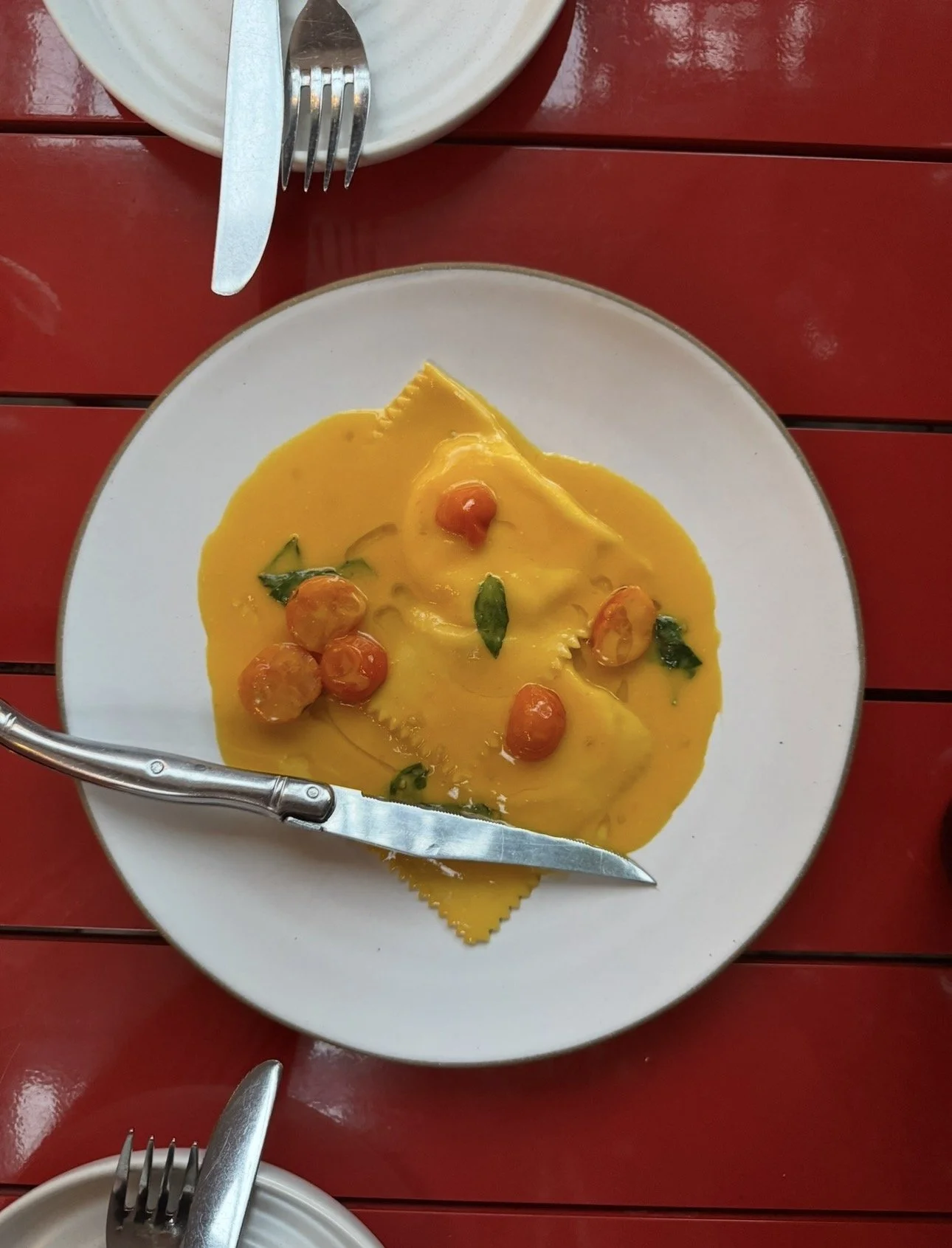
The cooking showed equal assurance. Handmade ravioli, stuffed squash blossoms, airy focaccia with a crisp exterior and beautifully prepared fish reflected both Italian traditions and the agricultural abundance of Lancaster County.
And then there were the potatoes.
Golden and deeply crisp, with craggy edges and herbs fried alongside them, they were among the best I've eaten. The kind of dish that makes you appreciate how much skill can go into something seemingly simple. They arrived without ceremony and disappeared just as quickly.
Even the choice of plates and cutlery felt considered, part of an experience where the details contributed to the pleasure without competing for attention.
Nate, who grew up in nearby Ephrata and worked in acclaimed San Francisco kitchens before returning to Pennsylvania, stopped by our table. Our conversation was warm and easy. I sensed a quiet confidence in him and throughout the team. The restaurant's standards were evident, but nobody seemed interested in making a performance of them.
What stayed with me most, however, was the relationship between the restaurant and the neighborhood.
As the evening unfolded, people arrived from nearby homes, some apparently having walked only a block or two. They settled into a restaurant that others might travel considerable distances to experience, but that for them was part of the familiar landscape of home.
I found that genuinely exciting.
I've spent much of my career noticing the details that give businesses their identities. How people work together. The standards behind the products they make. The way a space welcomes its customers and fits into its surroundings. At LUCA, those details revealed something that extended beyond the dining room.
Restaurateurs Taylor and LeeAnn Mason have built a place where culinary ambition and neighborhood life reinforce one another. The restaurant's distinctive setting, accomplished team and connection to regional ingredients give people reasons to seek it out. The experience itself gives them reasons to return.
That relationship matters commercially, but it also raises a larger cultural question.
For decades, we've associated certain levels of dining, design and hospitality with major cities. What happens to our understanding of a desirable place to live when those experiences become available in communities like Lancaster, woven into the routines of everyday life?
One restaurant cannot determine a city's future. But the businesses people choose to return to help shape its character, create shared experiences and influence how residents feel about where they live.
I left LUCA delighted by the food and the people who made the evening special. More than that, I was happy for the neighbors who had such an extraordinary place within walking distance.
And I found myself thinking about how much richer our communities become when exceptional experiences are part of ordinary life.
See what this thinking can make possible.
Explore how I help brands and business leaders turn cultural intelligence into strategy and action.